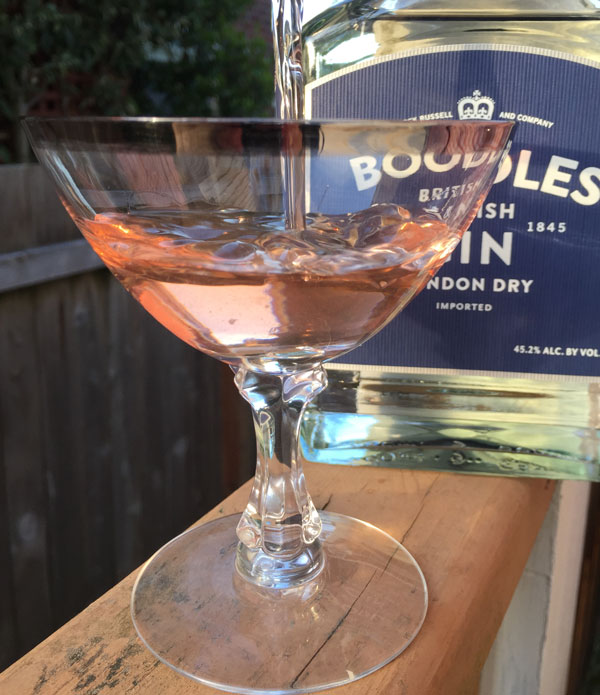
Recently, as sometimes happens (don’t be jealous!), a bottle showed up in the mail. This time, it was Boodles gin (thanks Boodles!) and I couldn’t have been happier. I’d had Boodles here and there, but not at home (well, unless I’m remembering poorly and it was long long ago, and I’m not that old, really). Boodles is a very proper British gin – a variety of spirit I’m quiet fond of – made from British wheat, with a number of botanicals and herbs (though, a bit unlike a fair share of modern gins, no citrus). As you might expect, it’s dandy in Martinis and the more traditional gin drinks.
But hey, if you’ve read this blog before (and if you haven’t, where have you been, friend), you know I tend on occasion to want to push the envelope so to speak, see if I can create a drink that isn’t necessarily along the lines you might think, or which uses ingredients that at first glance make one say, “what?” An Elusive Memory, a Boodles-based cocktail I made up recently, sorta falls into that category. But darn, the end result is so dreamy. It’s just that Meletti anisette (the finest anisette, in my opinion) doesn’t necessarily seem like it’d go with Boodles at first, and especially Lillet (another key ingredient). Then I brought the new-ish Whiskey Barrel Aged Peychaud’s bitters in, and . . . not an expected “umm,” but a welcome “ah-ha!” It took a big of finagling, but trust me, folks, this is a tasty, layered, mixture that plays nice.
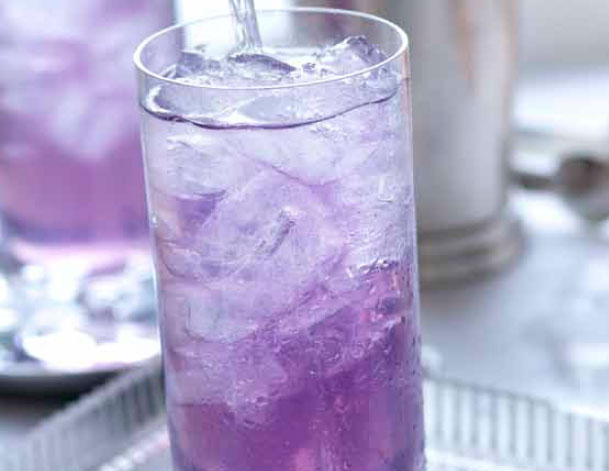
You know a drink’s good when it’s in the title of a book. Hah! See, the funny part is, I’m saying that about this particular drink that is in the title of one of my own books (Ginger Bliss and the Violet Fizz, that is), which probably makes me sound like a bit of a chump. But heck, when you try the bubbly below drink, you’ll forgive me I’ll bet. It’s another one that’s matches summer like a well-matched sock (I really love socks – one more little tidbit about me you were dying to know), as it’s refreshing but not too taxing to make. I suggest it for brunches, where its color and deliciously delicate flavor is sure to be a hit.
The Violet Fizz
Ice cubes
2 ounces gin
1/2 ounce crème de violette
1/4 ounce freshly squeezed lemon juice
1/4 ounce simple syrup
Chilled club soda
1. Fill a cocktail shaker halfway full with ice cubes. Add the gin, crème de violette, lemon juice, and simple syrup. Shake extra well.
2. Fill a highball glass three-quarters full with ice cubes. Strain the mixture into the glass.
3. Fill the glass with chilled club soda, stir well, and drink quickly, before those bubbles have a chance to fade.
I’ve been lucky in life, in that I’ve had a fairly large share of amari (the Italian digestif of herbally goodness everyone loves now), and been a fan for a while, and have brought a couple neat obscure ones back from Italy. I feel like I’m bragging – please don’t throw a tin can at me! Here’s one thing that will balance it out. I haven’t had a bottle of Amaro Lucano in the house before! Before now, that is (hah)! I’d tasted it before, and liked it, but until a bottle showed up, as they sometimes do, I hadn’t spent any real time with this particular amaro.
If you don’t know, Lucano has been around since 1894, when a well-known cookie baker (really! I love these stories) named Pasquale Vena blended up mysterious herbs and spices and boom, deliciousness. It really kicked up the fame, though, when in 1900 it became the drink of choice to ancient ruling family the House of Savoy, whose crest is on the bottle. Neat, right? The amaro is a tiny smidge to the right on the sweetness scale for amari, with a strong caramel-ness, though containing a rich bitterness as well, and nice floral, citrus, and spice accents.
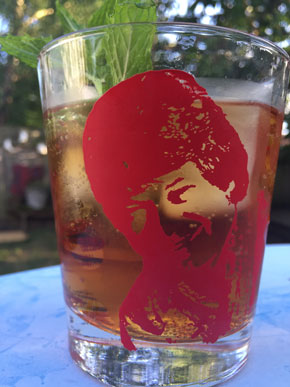
Anyway, it’s the kind of thing you tend to have after dinner, and not what you think of as a summer treat. Which is why I challenged myself to make a summer drink with it – because I am like that, and because I like bitter sodas, and because what’s the world for if you don’t challenge yourself? All that! So, I paired it up with some usual and some unusual suspects, tried a little of this, and a little of that, and came up with the below. It’s effervescent, it’s got a host of herb and spice and citrus notes, and it’s darn refreshing and flavorful all at once, like a bubbly Tilt-a-While for your tongue. Try it – and then thank the Vena family. And me (well, why not?).
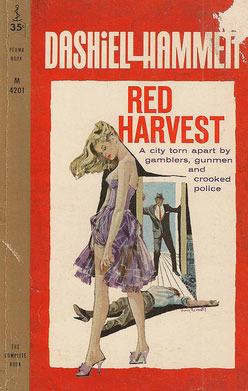
Hah! I told you there’d be three Cocktail Talk posts from Dashiell Hammett’s hard-hard-boiled book Red Harvest, and now we’re up to the third (and really, I could do more!). If you’ve missed Red HarvestPart I or Part II, then go catch up if you know what’s good for you. But don’t miss this one! Where a few of the key characters in the book sip on Martinis – in the way they probably did at the time the book takes place, meaning they have some orange bitters in the mix. Which is delicious!
When I came back she was mixing gin, vermouth and orange bitters in a quart shaker, not leaving a lot of space for them to move around in.
“Did you see anything?” she asked.
I sneered at her in a friendly way. We carried the cocktails into the dining room and played bottoms-up while the meal cooked. The drinks cheered her a lot. By the time we say down to the food she had almost forgotten her fright. She wasn’t a very good cook, but we ate as if she were.
We put a couple of gin-gingerales in on top of the dinner.
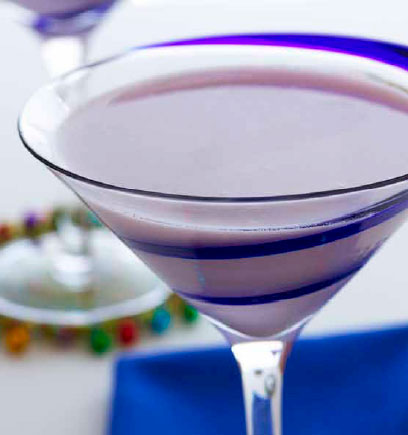
During the summer months (and really, even though we’re not officially in summer, let’s call it summer, okay? June feels like summer to me. Go with it), it’s tempting to have a drink called The Snowball – right? Right. But, there are so many! There’s the one with advocaat (the liqueur made from egg, sugar, and brandy) and sparkling lemonade. There’s another with brandy, simple syrup, an egg, and ginger ale. Both have their moments. But today, this particular day, I’m going with the below, which is wonderful on an early summer’s night, and of which famed drink explorer Harry Craddock said, around 1930, “This is women’s work.” Hah, I’ll show you Harry.
Ice cubes
2 ounces gin
1/2 ounce crème de violette
1/2 ounce white crème de menthe
1/2 ounce anisette
1/2 ounce heavy cream
1. Fill a cocktail shaker halfway full with ice cubes. Add the gin, crème de violette, crème de menthe, anisette, and cream to a cocktail shaker. Shake well.
So, you know, it’s the NBA playoffs. I like the NBA quite a lot. I’ve been watching the playoffs, mostly with my nephew, who’s 14 and so doesn’t drink. Heck of a baller though, really. But it’s probably good I’m watching them with him, or I’d get melancholy for the Seattle Supersonics, stolen these many years ago, and then I’d probably drink too many Supersonic Cocktails, instead of just the 4 or 5 I’ve had in honor of the green and gold. Dang! Speaking of things I miss, I also miss the mighty Cocktail to Cocktail Hour (the world’s best cocktail show with “hour” in its name), which is on extended hiatus as director, producer, co-writer, best boy, head gaffer, and inspiration Dr. Gonzo remains stuck in a Tijuana prison. At least we have the re-runs, like the below, which teaches you to make said Supersonic cocktail, with gin, green Chartreuse, lime, simple, and lemon.
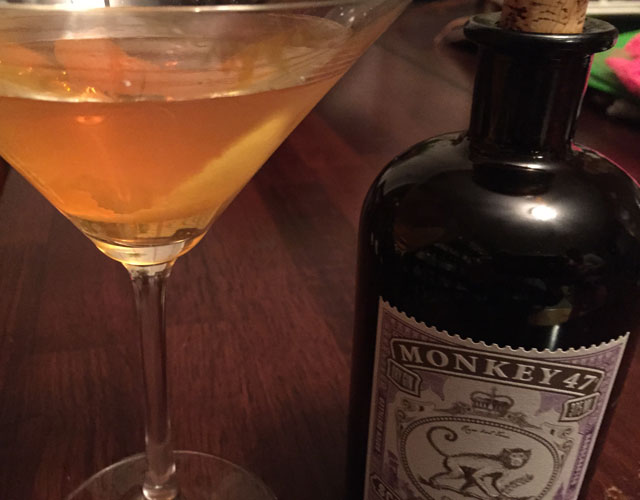
Recently, as I do, I decided I wanted a new cocktail – and often for me that actually means an old cocktail, an unburied treasure in a glass that I haven’t yet had. This time, the first older book at hand was Patrick Gavin Duffy’s Official Mixer’s Manual (1940 edition), and as I browsed through this worthy tome of libations, I came across The Lord Suffolk. With a name so regal, I figured the drink must be regally awesome (oh, an aside – I haven’t yet had time to browse the library and see where this drink first came from. Sue me). And I figured right!
However, it’s a drink with a sizable wallop of gin, which then mingles with much smaller amounts of maraschino, sweet vermouth, and Cointreau. Because of that, I knew it needed a gin with a fair amount of personality, one that brings layers of flavor to the table. I went with the newish (to me, at least), and award-winning Monkey 47 Schwarzwald Dry Gin, and darn if it wasn’t perfect, thanks to the smooth juniper flavor, sure, but even more the accompanying notes: citrus, spice, pepper, and an intriguing stitch of botanical and berries. It’s tasty stuff, and named after a monkey. That says it all.
And here in this cocktail, with just enough nutty maraschino, sweet and orange-y Cointreau, herbal vermouth, and lovely lemon oil coming along for the ride, the gin is allowed to blossom and not get lost. This is a helluva drink folks. And hopefully, somewhere, Mr. Duffy is smiling that it’s in a small way back in circulation.
Sometimes, I even surprise myself when making drinks. This is one of those times! When I started messing around with the three ingredients in this drink, I was all, “there is no way these will come together,” and then, “yowza!” they worked better together than Sonny and Cher. During their good period. It started with Sidetrack Distillery’s new Shiso liqueur, which is made from the Asian herb it’s named after, and which is a singular, herby, botanical elixir that must be tasted to be believed, and which has a brilliant color to match its taste. I figured (rightly, as it turned out) that it would go well with gin, but I needed a gin that had a solid juniper taste, but also a little citrus, and some botanicals as well – and Copperworks gin is just like that (and it’s local to WA, much like the Shiso, so that was nice). But the third ingredient is a wild card – the Italian orange-y and a wee bitter-y aperitif, Aperol. I just worried the cocktail would get muddled with all those flavors, but dang, instead they all just shared the spotlight in a way that let the flavors shine. This is swell spring drink, and if you can track down these three, give it a whirl.