December 12, 2012
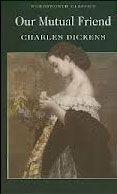 If I could, through the wonders of wondrous science (c’mon science, I’m buttering you up, make this happen) either go back in time to have a drink with Mr. Charles Dickens, or go miraculously into the universe of a Dickens’ book, well, I’d be tickled. Sure, sure, I wouldn’t want to go forever (I mean, Sookie and Rory wouldn’t be around, for one. And Dr. Strange wasn’t even a thought yet), but the pub and bar scenes he relates, and his evident adoration for certain drinks, call out to me in a slightly slurred voices. And if I had to choose which of the many watering holes from the many Dickens’ books? Well, I’m not sure, but the Six Jolly Fellowship Porters from the great book Our Mutual Friend would definitely be in the running, if not running away with my vote and me. Wonder why? Read the below quote why dontcha.
The bar of the Six Jolly Fellowship Porters was a bar to soften the human breast. The available space in it was not much larger than a hackney-coach; but no one could have wished the bar bigger, that space was so girt in by corpulent little casks, and by cordial-bottles radiant with fictitious grapes in bunches, and by lemons in nets, and by biscuits in baskets, and by the polite beer-pulls that made low bows when customers were served with beer, and by the cheese in a snug corner, and by the landlady’s own small table in a snugger corner near the fire, with the cloth everlastingly laid. This haven was divided from the rough world by a glass partition and a half-door, with a leaden sill upon it for the convenience of resting your liquor; but, over this half-door the bar’s snugness so gushed forth that, albeit customers drank there standing, in a dark and draughty passage where they were shouldered by other customers passing in and out, they always appeared to drink under an enchanting delusion that they were in the bar itself.
For the rest, both the tap and parlour of the Six Jolly Fellowship Porters gave upon the river, and had red curtains matching the noses of the regular customers, and were provided with comfortable fireside tin utensils, like models of sugar-loaf hats, made in that shape that they might, with their pointed ends, seek out for themselves glowing nooks in the depths of the red coals, when they mulled your ale, or heated for you those delectable drinks, Purl, Flip, and Dog’s Nose. The first of these humming compounds was a speciality of the Porters, which, through an inscription on its door-posts, gently appealed to your feelings as, ‘The Early Purl House’. For, it would seem that Purl must always be taken early; though whether for any more distinctly stomachic reason than that, as the early bird catches the worm, so the early purl catches the customer, cannot here be resolved. It only remains to add that in the handle of the flat iron, and opposite the bar, was a very little room like a three-cornered hat, into which no direct ray of sun, moon, or star, ever penetrated, but which was superstitiously regarded as a sanctuary replete with comfort and retirement by gaslight, and on the door of which was therefore painted its alluring name: Cosy.
—Our Mutual Friend, Charles Dickens
Tags: Bars, Charles Dickens, Cocktail Talk, Dog's Nose, Flip, Our Mutual Friend, Purl, Six Jolly Fellowship Porters, time travel to visit bars from the past
Posted in: Bars, Cocktail Talk, Drinking Writer
November 27, 2012
 I have to imagine there are people who miss the cold war. Old spies, counterfeit passport makers, marketers of microfiche. But most of us are probably pretty good with the cold war being far enough in the past that people under 20 probably don’t really know what the phrase means. However, you can still (if you are a you that looks for things like this) uncover books that fall into the cold-war literary genre. Not a big genre, but the one that Who Is Elissa Sheldon? by David Montross fits into. It’s a book where everyone is a double agent, many characters have multiple names, and “the Reds” is a phrase that doesn’t refer to a baseball team in Cincinnati. Not the best read, but fun in its double-dealing way. And, one of things that defined the cold war was fairly straight-ahead drinking, usually an Old Fashioned like in the below quote:
‘No, I waited for you.’ She didn’t look well, her eyes were heavy and her mouth dropped. ‘I’ll have an Old Fashioned if they can make it. That’s what she used to drink.’ Adam ordered for the girl and refused anything for himself. Then he sat back and studied her. The blue suit was wrinkled, and her blouse was wilted and greyish. There was a certain pathos in her, but his involuntary concern hardened because there was no remorse in her. The worse she looked, the better he liked it.
— Who Is Elissa Sheldon?, David Montross
November 20, 2012
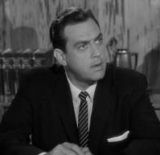 As I mentioned in some past posts, I’m not a giant fan of the Perry Mason books written by Erle Stanley Gardner. I don’t loath them or anything, and I have a decent number (well, the covers are so darn fine, and the books aren’t so darn bad). However, I do positively dig the Perry Mason television show starring the commanding-yet-convivial Raymond Burr. I may have mentioned this in one of those past posts, actually. Shot in beauteous black and white, the Pery Mason series in my mind is one of the highpoints of the whole teevee medium, thanks in large part to Mr. Burr but also thanks in part to the regular supporting cast: the long-suffering DA Hamilton Berger, the jolly Sergant Trask, the suave detective Paul Drake, and the lovely, supportive, and cuddly Della Street as Perry’s confidential secretary (played by William Talman, Ray Collins, William Hopper, and Barbara Hale respectively). All gems. Anywho, this is a bit of pre-amble to the following quote, which is a highlight from an episode called The Case of the Fancy Figures, which is about a cad who gets murdered. It’s truly one of my fav quotes about bars ever, and I like it even better since it comes from one of my favorites shows:
If you have to wait, there’s nothing like a bar. After a few drinks, it becomes a fairyland. People are so kind and considerate.
— The Case of the Fancy Figures
November 13, 2012
 It’s weird, but I don’t think I’ve had a Cocktail Talk post featuring a quote or quotes from a Donald E. Westlake book. Or, I just can’t track one down. Or maybe it’s not so weird — I haven’t read a ton of Westlake, but it feels like I’ve enjoyed enough books here and there. And now I’m meandering. Bank Shot is a caper book, one of like 100 books by Westlake (oh, he also wrote the screenplay for The Grifters, which is rad), and probably the only book where the not-always-so-smooth criminals rob a bank by actually stealing the whole bank building. It also was the basis for a movie. They also do a lot of their planning in the back of a bar, which is if not the safest at least the most congenial spot I can think of to plan a robbery. And you can have a drink while planning. They drink a fair amount in Bank Shot, too, and now I have drawn everything full circle, which means it’s time for the quotes:
Victor said, “I’m drinking tonight.” He sounded very pleased. Dortmunder ducked his head a little more and looked at Victor under his fingers. He was smiling, of course, and holding up a tall glass. It was pink. Dortmunder said, “Oh, yeah?” “A slow-gin fizz,” Victor said.
He had planned his menu with the greatest of care. The cocktails to begin had been Negronis, the power of the gin obscured by the gentleness of vermouth and Campari.
—Bank Shot, Donald E. Westlake
October 23, 2012
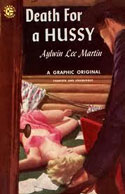 There are times the cover sells me on purchasing a pulp-y pocket-y book (many past Cocktail Talk posts are evidence of such). And then other times when it’s the title. Or, the description on the back cover. Death for a Hussy (by Alywin Lee Martin) has all three. The cover pic is to the left. The title, well, I just mentioned it. And the first line of the description on the back cover reads, “She was very young, very beautiful and . . . very dead!” Now that combination had me hook, line, and sinker. Not a bad little read, really. And it contained the following boozy quote, too:
“I’m one of the bartenders,” he said. “Me helper comes on at ten o’clock. The joint begins jumping then. Whata ya drinkin’?”
“Scotch with a little soda.”
Jocko mixed the drink and put it down in front of Hughes. “Haig and Haig. The real McCoy—outuva an honest-to-God pinch bottle.”
“Have one with me,” Hughes invited.
Jocko pour a tumbler half full of Haig and Haig and threw the whiskey into his mouth. The glass didn’t even touch his lips.
–Alywin Lee Martin, Death for a Hussy
September 18, 2012
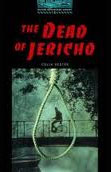 So, here’s a kind of a funny story about British TV and this set of quotes. Randomly, when I was living in Italy (which, as an aside, did not suck. It was, between us, as far from sucking as possible), I watched a fair bit of British TV, including some shows on the Alibi Channel. Those who know me (like you) know I like the mysteries of all types, so no surprise. One show I caught and got hooked on was called Lewis. It’s about a sort-of everyman police detective and his literary-minded sergeant solving crimes in Oxford. It’s literate without being nose-turned-uppity, serious but funny, lovely and reverent towards the city. And the murders are good, too. Anyway, I didn’t know at first but it’s a spin-off of a long running British hit, the Inspector Morse mysteries, in which Lewis is the sergeant and the very literary (and booze-and-lady-lovin’) Morse is the main man. These shows started out based on a series of books by a guy named Colin Dexter, and I just picked up and read my first one, The Dead of Jericho. And that’s where these quotes are from (oh, it’s a dandy read, too).
Yes several time already, in the hour or so that followed the brisk, perfunctory ‘hullos’ of their introduction, their eyes had met across the room—and held. And it was after his third glass of slightly superior red plonk that he managed to break award from small circle of semi-acquaintances with whom he’d so far been standing.
. . .yet others lift their eyes to read the legend on a local inn: ‘Tarry ye at Jericho until your beard’s be grown.’ But the majority of the area’s inhabitants would just look blankly at their interlocutors, as if they had been asked such obviously unanswerable questions as why it was that men were born, or why they should live or die, and fall in love with booze or women.
–Colin Dexter, The Dead of Jericho
September 4, 2012
 Sometimes, a quote just speaks for itself (which means this may well be the shortest Cocktail Talk post on record. Oh, one thing: this is from one of the Complete Imbibers. Read more about them by following the link in the preceding sentence):
I remember, for example, being taken to see a neurotic Frenchman who was staying there with his wife, and vividly recall Sunday morning in his suite, the wireless resounding to a clergyman’s voice reading the Lesson, while we drank Pernod, and a Pekinese tried in vain to seduce a monkey.
–Anthony Powell, “A Bottle of Wine at the Cavendish,” from The Complete Imbiber 6, 1963
August 20, 2012
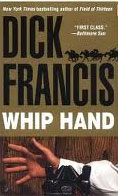 When growing up, we owned a bunch of horses. And yeah, I showed them and all that (though not nearly as well as my sister). But, even with this bit of background, and my admiration for men in a certain type of suit, I never have spent much time at the track (that’s the horse track, for those of you still thinking Olympics). Which is probably one of the reasons I haven’t read much Dick Francis, who writes a lot of his mysteries around the tracks of England and the folks that hang out at or near them. But when on an extended trip to Italy once I was in a need of a book, and there was a Dick Francis number where I was staying, and so I read it, and liked it pretty darn well. It was called Whip Hand, and was horse-y, and had the following quote which I was quite fond of:
We met most weeks at noon in the upstairs bar of the Cavandish Hotel, where a pink gin for him and a whiskey and water for me now stood on prim little mats beside a bowl of peanuts.
–Dick Francis, Whip Hand