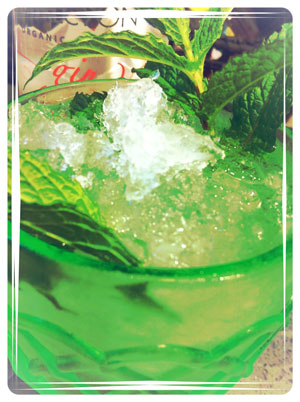
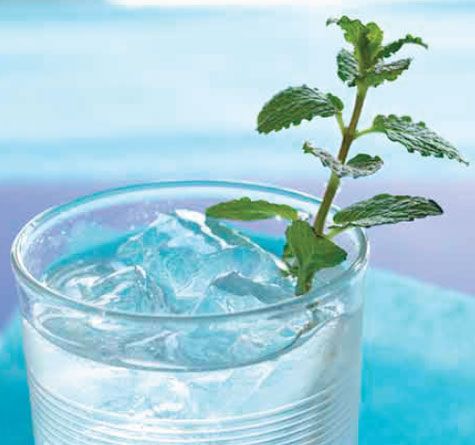
This is sort-of like a Julep in some ways, and like a Smash, and probably identically close to another classic recipes that use a booze, sweetening, crushed ice, and mint that I’m forgetting at this moment. None of that bothers me (does it bother you? Perhaps you’re at the wrong blog?), as the end result no matter what is a super refreshing, slightly spirituous, a wee bit sweet, flavorful icy drink that will make your summer parties sing. It can take some arm power to bust up ice into crushed ice, but you know what? I think you’re tough enough. And as mentioned, the end result is, well, smashing.
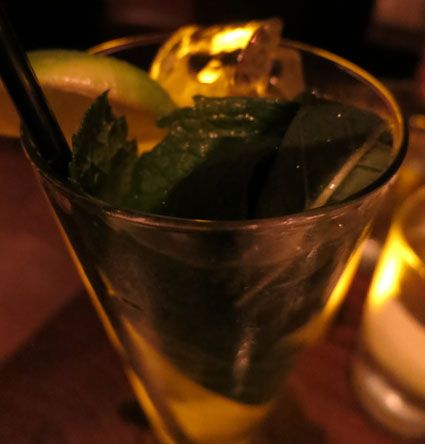
Beyond Blackbird (which I detailed earlier and which I was a big big fan of), when I was in San Francisco recently I also stopped in at Absinthe Brasserie and Bar. First off, let me mention that I accompanied the wonderful and charming Sally and Corinne from the Lisa Ekus agency (the best agent, pr, media training, and more firm in the firmament) and some other folks associated with that fine orgnaization. If you have company like this, well, the restaurant or lounge you’re lounging in can probably serve almost anything and you’ll have a dandy time. However, if the drinks are as good as they were at Absinthe, the evening goes quickly up to wonderful. I started my drinking with a Ginger Rodgers, which is a variation on a drink called, simply, “Favorite Cocktail” from the classic pocket-sized cocktail book Drinks, written by Jacques Straub in 1914. It was everything a first drink before dinner should be: light-but-flavorful, bubbly, and a good appetite inducer:
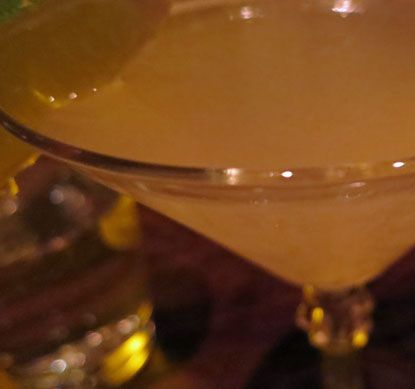
After that, I was eating some delicious food (the mac-and-cheese was especially nice – and I should have taken a pic but was too busy eating and talking), and wanted something with a lot of flavor to accentuate the edibles. I went with a classic: the Pegu, from way back in the 1920s. It was tasty, tangy, and with a kick:
Heck, you should have one at home if you never have. It’s famous and fabulous. Here’s the recipe from Ginger Bliss and the Violet Fizz:
Ice cubes
1-1/2 ounces gin
3/4 ounce Pierre Ferrand orange curaçao
1/2 ounce freshly squeezed lime juice
Dash of orange bitters
Dash of Angostura bitters
1. Fill a cocktail shaker halfway full with ice cubes. Add the gin, orange curaçao, lime juice, and both bitters. Shake well.
2. Strain into a cocktail glass, and dream of days when this classic was (according to Harry Craddock in The Savoy Cocktail Book) a drink “that has traveled, and is asked for, round the world.”
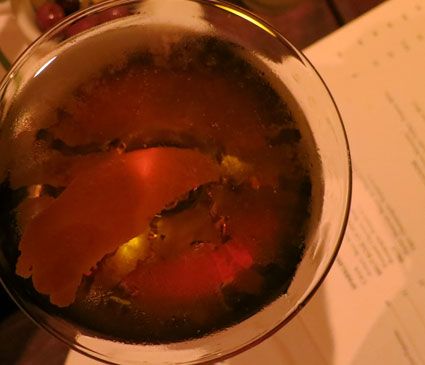
After the Pegu, I had something with whiskey that I forgot to write down as the conversation was in full swing. But it was good, so just try all the whiskey drinks and you’ll get there. Here’s a photo, anyway:
Overall, an amazingly awesome evening spent with some of the swellest folks in the land, some delicious cocktails, and some scrumptious eats in a classy-but-comfy spot. Absinthe gets a “A” in my book (if I had some sort of book I put letters in, that is).
Okay, this one looks pretty un-2013, with its pairing of out-of-favor-with-snooty-bartenders favorites crème de caco (perhaps the finest drink ingredient to say out loud, if you say it with the right ending emphasis) and peppermint schnapps. Between us, I haven’t consumed as much peppermint schnapps in the last 28 years as I did 29 years ago. Maybe there’s a correlation there? Who knows? However, with the sun starting to shine and the temperature starting to go up, it’s good to get the Coney Island Baby into your repertoire, because it’s an ideal thirst quencher for the summer months. Refreshing, minty, and working well with white outfits, and from Ginger Bliss and the Violet Fizz, forget about your schnapps bias and stock up for summer. You’ll thank me later.
Coney Island Baby
Cracked ice
2 ounces white crème de cacao
1 ounce peppermint schnapps
Ice cubes
Chilled club soda
Fresh peppermint sprig, for garnish
1. Fill a cocktail shaker or mixing glass halfway full with cracked ice. Add the crème de cacao and peppermint schnapps. Stir well.
2. Fill a highball glass three-quarters full with ice cubes. Strain the mixture over the ice. Fill the glass almost to the top with club soda. Stir, and garnish with the peppermint.
Some days, I want to drink a drink with banana in it (rare days, but sure). Some days, I also want to wear a bowler hat, walk around the house saying “pip, pip” and talking in perhaps the worst English accent of all time. Some days, I also like to have a bit of gin. Some days, I’ve been known to don spats. Some days, I’ll read Agatha Christie until my eyes get tired. Some days, I do every single one of the aforementioned things at the same time. On those days, I’ve probably had more than one Silver Jubilee (using this recipe from Ginger Bliss and the Violet Fizz).
Silver Jubilee
Ice cubes
2 ounces gin
1 ounce crème de banana
1/2 ounce heavy cream
1. Fill a cocktail shaker halfway full with ice cubes. Add the gin, crème de banana, and heavy cream. Shake well.
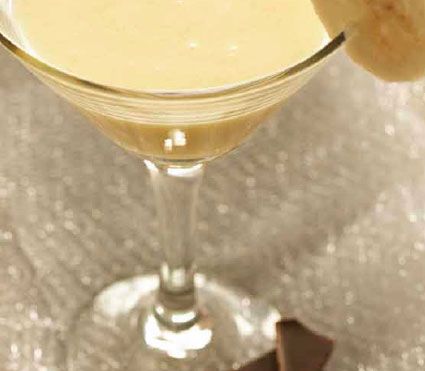
2. Strain into a cocktail glass. If you’re having one of those days, garnish with a piece of dark chocolate and a thick banana round.
I was in Italy recently (and yet still, thanks to the wonders of modern blogging, had posts up. Cause that’s how much I care. A whole lot), which isn’t too much of surprise for those who know me. I used to live there (detailed in detail on the Six Months in Italy blog), and have pals and favorite restaurants to visit when I go, as well as intriguing amaros and liqueurs and wines to track down and artistic sites and vistas to see. All that. This last time, I visited a city in Le Marche called Ascoli Piceno for the first time. It’s an off-the-tourist-track kind of a place by and large, but it has a lovely city center, all made of travertine, and some very lovely churches, and a history of pottery making. All good stuff. But perhaps best of all, it’s where the Meletti company is, a company known for making delicious imbibables. I was introduced to their products by the dashing Spirits Director at Vinum Importing, Andrew Bohrer (who also writes the blog Cask Strength). What I didn’t know, though, until getting to Ascoli Piceno, was how amazing the Meletti Café is.
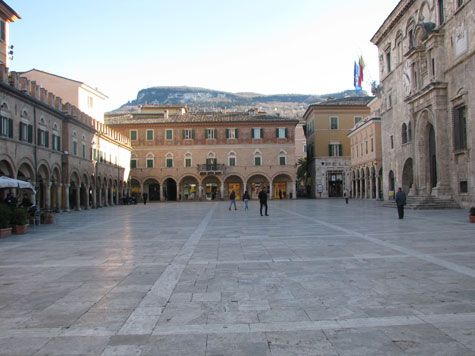
It sits right on the corner (in the below shot, back right) of the city center I mentioned, which is known as the Piazza del Popolo, and which is one of the prettiest piazza’s I’ve been in:
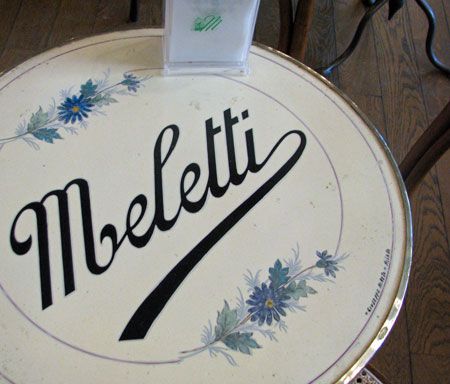
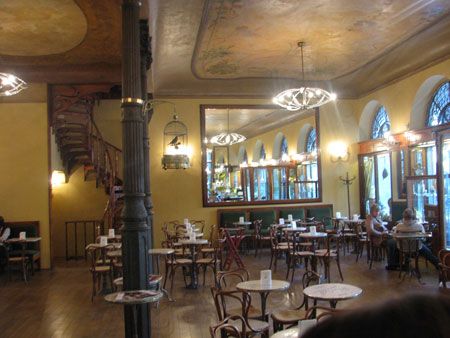
After visiting it, I think I can say with some authority (considering just how many bars, lounges, watering holes, etc that I’ve been in) that Café Meletti is an awesome bar to spend a few afternoon hours within (in Italy cafés seem like local bars to me, as there is usually as much tipsy drinking as coffee drinking). I’d even go out on a tipsy limb and say one of the world’s best. It has an art deco-y style with remarkable tabletops:
interiors:
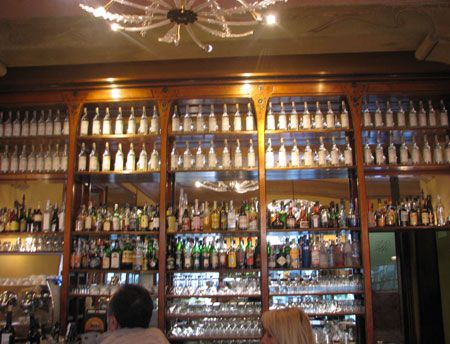
and a beautiful bar manned by charming and helpful bartenders:
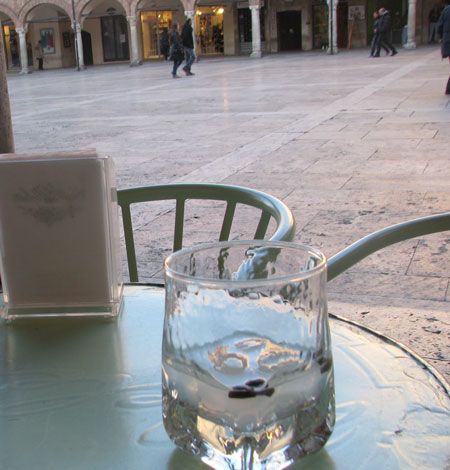
I ordered a Meletti Anisette, which is the most well-known of the Meletti offerings, and which is the finest anisette available anywhere. It has a layered anise flavor and an underlying sweetness that tastes pure and natural; it’s a liqueur that’s meant to be savored and not shot back, and one that mixes like a champion dancer into cocktails – but which has to be had solo (or with three very small additions) to be completely understood. I got it over a few ice cubes, and was going to have it just like that, until a gracious older Italian gentleman reached over and added three espresso beans for me. These are the “mosche” or flies, and not only add a faint pleasant zing to the flavor, but also represent health, happiness, and prosperity.
All of which I’m for. I took the Meletti Anisette outside to the tables there, and sipped it while watching the people stroll the piazza. It was an experience I’m darn glad to have had, and one I suggest you try, if you get the chance (and if you can’t get to Ascoli Piceno, then pick up a bottle of Meletti and have it on your back porch).
The newest episode of the Cocktail to Cocktail Hour is here, and this time, we’ve gone international with another Everyday Drinking segment, where I solve the drinking problem of an everyday person. But this time, that everyday person is someone who has come all the way from the United Kingdom! Amazing, isn’t it? A fine British gentleman by the name of Alastair Edwards (really!) is the star of this episode, where I teach him how to make the Sweetie-Pie cocktail from Good Spirits, so he can delight his American gal pal with it. There are also many hijinks, of course, as we wade into the waters of American/British differences and erupting hats – over drinks.
It’s time for the next episode of the almighty Cocktail to Cocktail Hour, and it’s a humdinger! It features another Everyday Drinking segment, where I solve the drinking problem of someone off the street. But this time, it’s not just any ol’ someone off the street, it’s Paul Stanley* from the greatest rock-and-roll band in the land, KISS. That’s right, the Starchild himself had a bit of a drinking query and he came straight to the Cocktail to Cocktail Hour (like all good people). It’s a heck of show, folks, with singing, grinning, and a beautiful drink for Paul called the Luminous Angel, containing Cognac, Elisir M.P. Roux liqueur, orange juice, and Seattle-made Scrappy’s Cardamom bitters!
*May not actually be Paul Stanley in video; may be a genius Paul Stanley impersonator. Please don’t sue us Mr. Stanley. We only did it cause we love you.
Way back on March 10, 2009, I posted about Cornell Woolrich, the noir-mystery-darkness master, quoting from his book Fright. I’m aghast that it’s the only Woolrich quote I’ve had on here, as I think he’s a darn fine writer, even though he has lots of books that aren’t going to leave you humming a jaunty tune – more walking around wondering why anything is worth it. Waltz Into Darkness is the only book of his I think that has “Darkness” in the title, but that word sums his selection up well (oh, he wrote it originally as one of his nom de plumes, William Irish, by the way). I strongly suggest reading up on your Woolrich even you have only a passing liking for the noir. Or, Benedictine.
It was by now eleven and after, a disheveled mass of tortured napkins, sprawled flowers, glassware tinged with repeated refills of red wines and white; Champagne and kirsch and little upright thimbles of Benedictine for the ladies, no two alike at the same level of consumption.