July 19, 2011
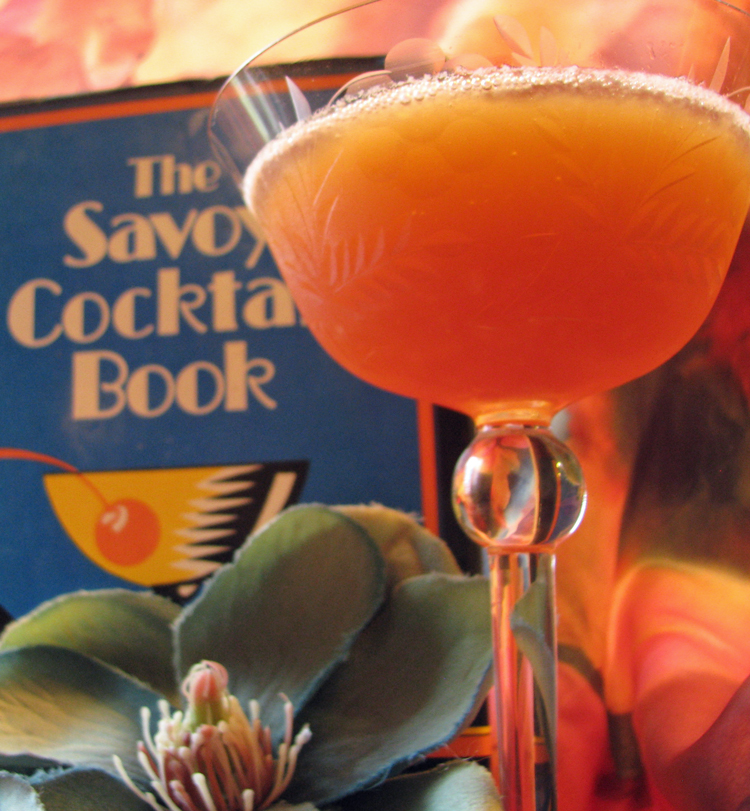
 Ayala’s Angel sounds a bit like a not-tawdry-enough romance novel that you’d find in the quarter bin of a bookstore specializing in romance trade-ins and the occasional “art” book. While it does have a bit of romance, if you decided not to read the book solely because of the connotations involved with the title, you’d be one sad reader, pal. Cause it’s an Anthony Trollope number, and while it has its fair share of yucks and laffs (perhaps it is as gently witty towards its main characters as any Trollope I’ve read), they’re surrounded by that eye for everyday detail that makes Trollope (along with the fact that his characters are memorable, his prose is sweet, etc, etc) so enjoyable to read. And the fact that it contains the following quote that references a particular vintage of claret (Trollope was so fond of this winery he bought–as the book’s notes tell us–24 bottles in one go) makes the book even better. Any reverence for a particular booze bears repeating:
But before the end of the first fortnight there grew upon her a feeling that even bank notes become tawdry if you are taught to use them as curl-papers. It may be said that nothing in the world is charming unless it be achieved at some trouble. If it rained ’64 Leoville–which I regard as the most divine of nectars–I feel sure that I should never raise it to my lips.
—Ayala’s Angel, Anthony Trollope
July 19, 2011
Spent an afternoon on pal Jeremy Holt’s (he’s the co-author of Double Take, the finest book ever about serving vegetarians and meat-eaters together, as you may or may not know, and a virtuoso chef and cocktail- and booze-maker) back deck recently, reveling in one of the few sunshine-y summer days we’ve had so far here in Seattle. And naturally, as it was summer, he brought out some of his homemade limeoncello for us to sip. See, I think of limeoncello as the sun-god of liqueurs, and think some chilled limeoncello when there’s sun out is wonderful thing. Jeremy’s recent batch was perfect, lemon-y with a kick and a smidge of sweetness. I don’t think it was exactly as the recipe in Luscious Liqueurs, but if you want to make your own, the recipe in that book will get you there. The limeoncello we had went down easy and was a good combo with a few cold PBRs:
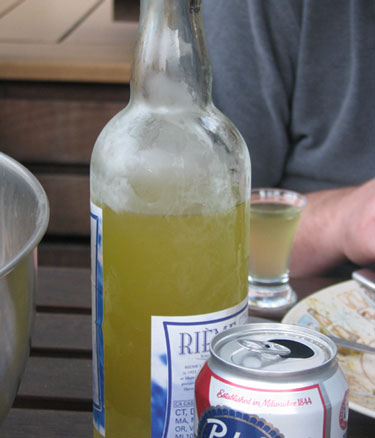
and was fantastic with a few fresh blueberries:
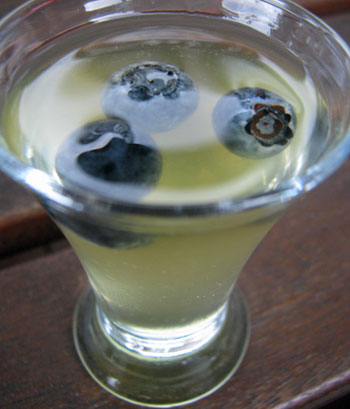
Here’s hoping we get at least a few more worthy summer days—and that Jeremy doesn’t run out of limeoncello.
July 14, 2011
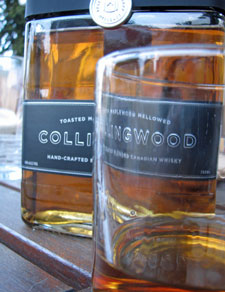 Before diving into Part 2 of my interview with Master Distiller Chris Morris, who is the creative force behind the new Collingwood Canadian whisky, I suggest if you haven’t that you take a gander at Collingwood Interview Part 1, below. For one, you can learn more about Canadian whisky (if you need to), learn about the process behind Collingwood, see the word “saccharified” used in a sentence, and more.
I’d also suggest pouring yourself (if possible) a nice dollop of Collingwood before reading the rest of the interview. I, myself, am having a glass as I type (I certainly wouldn’t want you doing anything I wouldn’t do), and enjoying it lots*. As mentioned in Part 1, I like Canadian whisky, as it tends to be smooth and very sip-able. Collingwood is, I think, a step above most, adding more spice notes without sacrificing smoothness and bringing a delightful sweet end note at the very last moment. But really, Chris is going to describe it in much greater detail below, so start reading.
A.J.: If you had to describe Collingwood’s taste to the home drinker, how would you describe it?
Chris: Collingwood’s unique finishing practice, the post blending maple mellowing process, creates a whiskey that is rich in sweet and spicy notes and is smooth on the palate. Aroma–graham cracker sweetness with delicate notes of vanilla, caramel and butterscotch underpinned by a rich floral (rose petal) and fruit character. Taste–creamy with a prickly vibrancy that fades into a delicate marzipan-dusted grain note. Faint hints of maple syrup drift about. Nice complexity. Finish–warm, sweet and long with a lingering floral and light malt whisky character.
A.J.: To step back to Canadian whisky in general, it seems (to me) that at one time there were more cocktails that called for Canadian whisky specifically, and then a little lull (outside of basic highball type drinks). Do you think there’s a resurgence happening in Canadian whisky cocktails? And if so, why?
Chris: The Canadian whisky category hasn’t yet benefited from the current cocktail craze to the degree that Kentucky Bourbon and Rye whiskies have due to the fact that, in general, it is composed of light and gentle tasting brands. These are easily dominated by mixers such as bitters and sweet vermouth. Complex and more favorable brands like Collingwood will help change that perception.
A.J.: Following the previous question up, are there certain known cocktails that you think would benefit from Collingwood being subbed in? How would a Collingwood Manhattan be, for example?
Chris: Collingwood would be a good addition to an Old Fashioned cocktail. The fruit selection for muddling would need to be adapted to complement its floral/fruit character.
A.J.: When someone tastes Collingwood for the first time, would you suggest they try it straight, with ice, with water, or in a cocktail? And how do you normally drink it?
Chris: I think the best way to introduce Collingwood to the palate is neat. That will emphasize its smooth character while at the same time deliver its rich flavor and vibrant spice notes. I drink Collingwood just that way–straight up.
A.J.: The Collingwood bottle is very unique and intriguing–how did the design come about? And do you feel it reflects the whisky’s personality?
Chris: The Collingwood bottle design is intended to make the statement that this is not just any Canadian whisky–it is new, contemporary, and stands out from the crowd. It is a whiskey designed to refine the Canadian Whisky category and refine yourself at the same time. The bottle definitely does reflect the unique personality of the whiskey.
*Much like in Collingwood, Part 1, I’d like to admit that I received a bottle of said Canadian whisky to test as part of this interview. And test it I did, many glasses of testing. I suggest you do the same.
July 12, 2011
 Sometimes, being a person who writes about cocktails leads to some tasty situations (and I’m not just saying this to start jealous rages out there, just stating a fact. And hey, sometimes I write about them on this very blog, sharing the tastiness). One recent example sent my focus northwards, towards our friendly neighbor nation, Canada. See (to stop being mysterious) I recently received the news that Washington state was going to be one of the first states to get to try the new Collingwood Canadian whisky*.
I tend to like Canadian whiskies (really, I tend to like all the boozes, as you probably know), and think sometimes they don’t get a serious look in our modern cocktail-and-liquor culture. Which is a shame, but hopefully a shame that will be rectified as folks continue their liquor explorations and as new distillers put their stamp on the genre with whiskies like Collingwood. Distillers like (for example, and yes this rambling is going someplace) Brown-Foreman Master Distiller Chris Morris, who was responsible for Collingwood. And who (see how this all ties back into that tasty situations bit above) was kind enough to take some time to talk about Collingwood, Canadian whiskies, and the distillery process. Because I’m wordy, the interview went on a bit, so I’m breaking it into two sections. Part 1 starts below, and Part 2 will be on the blog in a few days.
Oh, one more thing: if you live in Washington (or in Florida, Kentucky, Louisiana, or Texas, which are the states Collingwood is currently available within–though by the time you read this, your state may have it, too), I strongly suggest you pick up a bottle of Collingwood before starting to read. Because you’ll surely want a glass for sipping by the time you finish reading.
A.J.: To get started, for those out there who may not know (even those who don’t want to admit it), could you give a quick primer on Canadian whisky? Is it just whisky made in Canada? What else defines it?
Chris: I think the Canadian whisky category is one of the least understood in the whiskey family. By definition, a Canadian whisky is a potable distillate, or a mixture of distillates obtained from a mash of cereal grain or grain products that have been saccharified (turned into sugar) by a diastase of malt or other enzymes. Spirit is created by fermentation with yeast or a mixture of yeast and other micro-organisms and then aged in wood for not less than three years. All of this activity must of course take place in Canada. Bottling of the product can take place outside of Canada as long as the product is not presented at less than 80 proof (40% abv). The final product presentation may contain caramel coloring and flavoring.
A.J.: And to follow that up, what sets the new Collingwood apart from other Canadian whiskies? And, from other whiskies in general?
Chris: Collingwood adds an extra dimension to the Canadian whisky production process with its introduction of the Toasted Maplewood Mellowing process. Other than Jack Daniel’s use of Hard Sugar Maple charcoal in its mellowing process and the Woodford Reserve Master Collection’s Maple Wood Finish product, no other whiskey uses Hard Sugar Maple wood in its production process.
A.J.: As you were constructing Collingwood, were there certain, let’s call them whisky personality traits that you were aiming for?
Chris: Our objective in crafting Collingwood was to create a new style of Canadian whisky that was more complex without adding lots of blenders, flavors, etc. We wanted a Canadian whisky that would rival the great Single Malts from Europe in style and complexity.
A.J.: As a Master Distiller, are there specific steps and paths you take when crafting a new whisky, or more experiments, or a bit of both?
Chris: A Master Distiller should draw upon their years of experience as a source for inspiration and innovative concepts. The resulting concepts must be validated through rigorous experimentation that sometimes takes years.
A.J.: Was there anything in the process of crafting Collingwood that surprised you?
Chris: Experience has taught us to expect the unexpected. That is where the “ah ha!” factor comes into play. Sometimes during experimentation a new course to follow or concept to pursue develops that is more interesting (tasty) than the original one. We thought that Collingwood would be sweeter rather than more spicy than it turned out. It was a great development.
Okay whisky-adoring kiddies, that’s the end of Part 1 of interview with Master Distiller Chris Miller. Be sure to come back in a few days for the rest of the interview, to learn more about the new Collingwood Canadian whisky (including tasting notes and Chris’ choice for a cocktail utilizing it) and to tempt your liquor-loving tastebuds.
*To be completely open and honest, I did receive a bottle of Collingwood in the mail. But I wouldn’t ever tell you I liked something I didn’t actually like, friend. And I liked the Collingwood lots.
July 7, 2011
Seattle’s finally in a patch of sunny, summery, weather, which means one thing to wife Nat and I—we go inside to a dark, shady bar to have some drinks. We don’t want any of that sun by golly. No sir-ee. Give us the jazzy (and I don’t mean bubbly, here, but more 1932 jazz den of iniquity) insides of any bar serving them up with either a sneaky grin or a snarl. Cause that happy sunshine is just too much.
Okay, the above paragraph was a kidder, kids. We love the Seattle sunshine. But we also love having cocktails at Seattle’s Rob Roy, which does have a small deck in the sun when it’s sunny, but hey, the seats outside aren’t as comfy. And the inside of the Rob Roy is so groovy, that we decided to sit inside even with sun outside recently, sipping our drinks with pals Rachel and Jackie, and talking to pal Andrew Bohrer (he of the muscular and mighty Cask Strength blog) when he wasn’t making us drinks. The drinks, by the by, we mostly delicious. To start, I had a Pimm’s Cup (which I like to have when in the midst of a patch of sunny days, even when I’m inside): 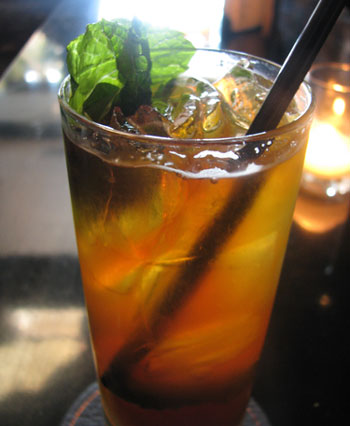
It was pretty darn good (if maybe a tad too mint-packed for me. But then again I’m vain, and always worrying about getting mint in my teeth). Nat started with one off the Happy Hour menu (she’s deal-oriented), the Oahu Gin Sling (which had gin, Cassis, Benedictine, lime, and soda):
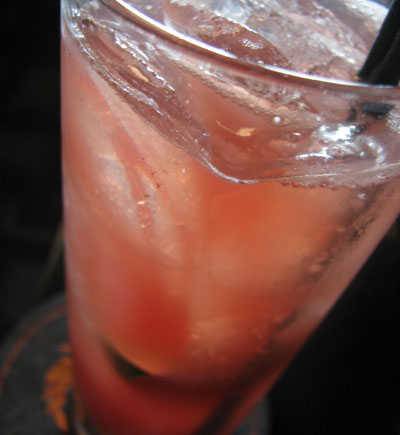
Nice-y nice. For Nat’s second drink, she had Andrew make her an old favorite (of hers, but heck, it may be one of his favorites, too), the Diablo. Tequila, cassis, ginger ale and deliciousness. In this pic, the drink’s a bit blurry, but he, it gives you a sort-of paparazzi view of Rachel and Jackie (who also had nice drinks, but I’ve forgotten what they were. Sue me) as well as showing the sun for those who think I was kidding about Seattle and sunshine:

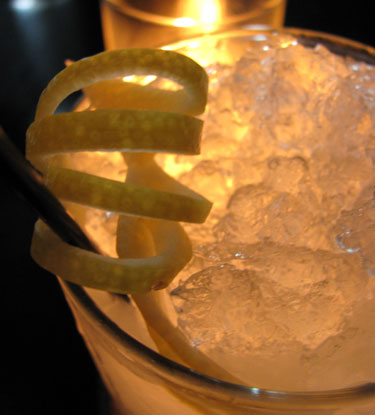
My next drink was an Andrew special, and for the life of me (honestly, if you held a gun to my classic cocktail book collection I could not remember) I can’t remember the name. But it was cracked ice, gin, a lovely vinegar, lemon, and I think something else. Maybe he’ll come by the ol’ Spiked Punch and let us know the name and if that was, actually the list of ingredients. But isn’t it a looker of a drink:
We had another round, but I put the camera down and focused on the conversation, as that’s more important than taking pics. I did, however, try to snap a snap of bar-tending Andrew actually behind the bar, working, but didn’t have any luck (he’s a blur back there). Instead, here is a final shot of his home-carved tool of ice destruction, his bartender’s Mjölnir if you will (and if you’re not afraid to admit you’re a geek and know what that means):
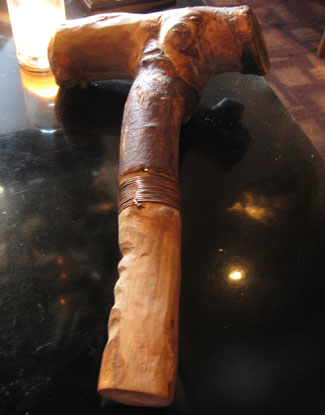
Be very careful when he’s swinging that hammer around. We don’t want any casualties at the bar.
July 5, 2011
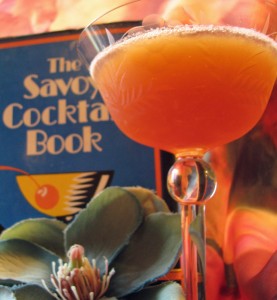 It’s July, so I’m not going to lie (really, I just wanted to make that rhyme. No, wait, really, I’m not lying. Really)—I have a strong affection for not only the Oriental Cocktail (a beaut of an unburied treasure utilizing a party power pack: rye, sweet vermouth, orange curaçao, and lime juice) but for pretty much all cocktails that come with a good story. Want to learn more? Check out this short-but-swell article on the Oriental Cocktail I wrote that was recently in a special summer cocktail e-issue of the Good Life Report (the article does have the full recipe, too—if you’re thirsty). If you don’t know about the Good Life Report, and yet feel you are someone who does, indeed, want a good life, then, well, sign up for gosh sakes.
PS: I almost forgot–that article also talks about Mark Butler’s genius drink the Occidental, too! How can you miss it?
June 29, 2011
I love this bubbly-and-bitter-belle-of-the-ball. First, it’s a variation on the Negroni (which is, of course, a fav) that subs in Prosecco for gin. Second, I originally had it and heard about it when staying in Florence at a spot called the Hotel Casci (not far from the Duomo, don’t you know), and pal Jeremy was there as well (we were drinking and playing Quiddler after a day of touristing). Third, it means “wrong” due to its Negroni-less-ness, if that makes sense, and I think having a drink called “wrong” is genius. Fourth, well, it tastes great–can’t go wrong with Campari, sweet vermouth, and Prosecco. Fifth, it (like La Rana D’Oro below) was a featured drink at a recent charity event that I slung drinks at (for my ma, if you didn’t know). Sixth, it’s also featured in my book Champagne Cocktails (which, if you don’t have, please buy, cause I need to be able to buy more sparkling wine). And seventh, well, seventh just adds up all the earlier six reasons to expand my love of this drink to epic–epic–proportions.
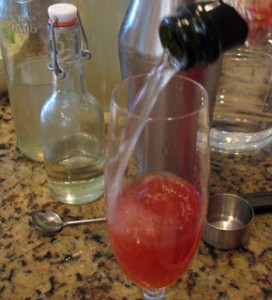
Serves 2
Ice cubes
3 ounces sweet vermouth
3 ounces Campari
Chilled Prosecco
2 orange twists, for garnish
1. Fill a cocktail shaker halfway full with ice cubes. Add the vermouth and Campari. Shake well.
2. Strain the mixture equally into two flute glasses. Top with Prosecco and garnish with the orange twists.
A Variation: You could use the Italian sparkling wine Moscato d’Asti or Asti Spumante here and be happy about it.
A Second Note: I could see the rationale behind serving this in a cocktail glass in the Negroni’s honor. I could also see the rationale behind calling this a sparkling Americano. But it doesn’t mean I’m going to do either of them.
Tags: Campari, Champagne Cocktails: 50 Cork-Popping Concoctions and Scintillating Sparklers, cocktail recipe, Cocktail Recipes, Italian drinks, Prosecco, Sbagliato, sweet vermouth, What I'm Drinking
Posted in: Campari, Champagne & Sparkling Wine, Florence, Italy, Liqueurs, Recipes, What I'm Drinking
June 27, 2011
I recently was slinging cocktails for an Italian-themed charity event (it was for my mom’s HeartWork, if you’re interested), and the drinks were so popular (I say, humbly) that I wanted to post a couple. And, I had a few myself, so I thought they’d fit right into the What’s I’m Drinking group. But here, in this picture, it wasn’t me drinking, but Kent, one of the fantastic piano players who were tickling the ivies for the event. And what he was drinking was the La Rana d’Oro. Sounds continentally intriguing, yes? Really, though, between us, it was just an older drink called the Golden Frog, which I’d Italian-ized (in name, anyway). The drink is packed with Italian punch no matter what language the name is in, however, boasting both Galliano and Strega, two golden and delicious Italian liqueurs. It has a bit of a kick, but hey, what would you expect from a frog? Kent sure seemed to like it:

Ice cubes
1-1/2 ounces vodka
1-1/2 ounces Galliano
1/2 ounce Strega
1/4 ounce freshly squeezed lemon juice
1. Fill a cocktail shaker halfway up with ice cubes. Add the vodka, Galliano, Strega, and lemon juice. Shake well.
2. Strain into a cocktail glass. Serve stylishly.
Tags: cocktail recipe, Cocktail Recipes, Galliano, Golden Frog, Italian drinks, Italian Liqueurs, Strega, What I'm Drinking
Posted in: Italy, Liqueurs, Recipes, vodka