August 18, 2020
 We are back for more Cocktail Talking from 1800s writer Wilkie Collins’ lesser-known gem No Name. If you haven’t read the No Name Part I Cocktail Talk, then I strongly suggest you do, to get a little background on the book, and the author (and if you really want to go into history, of a slightly less recent sort, but far more recent than the author himself, check out another Wilkie via The Yellow Mask and Other Stories Cocktail Talk). Did all that? Fan-Victorian-tastic! In this, our second No Name treat, our heroine Magdalen Vanstone is (in disguise – just letting you know that to be intriguing!) getting a tour of a house from one of its occupants, the charming (and tipsy) old sailor Mazey, who is a well-done memorable character, especially when he’s talking about monks drinking grog!
“No more, my dear — we’ve run aground here, and we may as well wear round and put back again,” said old Mazey. “There’s another side of the house — due south of you as you stand now — which is all tumbling about our ears. You must go out into the garden if you want to see it; it’s built off from us by a brick bulkhead, t’other side of this wall here. The monks lived due south of us, my dear, hundreds of years afore his honor the admiral was born or thought of, and a fine time of it they had, as I’ve heard. They sang in the church all the morning, and drank grog in the orchard all the afternoon. They slept off their grog on the best of feather-beds, and they fattened on the neighborhood all the year round. Lucky beggars! lucky beggars!”
–Wilkie Collins, No Name
August 11, 2020
First published in serial form in 1862/1863, No Name is not the book name (see what I did there!) that first pops up when one thinks of Mr. Wilkie Collins; instead, it’s The Moonstone, and then The Woman in White. Both of which have also had recent television adaptions. It makes some sense, too, especially as The Moonstone is in many ways arguably (gently, cause there is no need for a ruckus) the first, or one of the first, detective novels, kicking off a massive industry, and The Woman in White has a little of that action, too. However! Collins wrote many more novels, some good, some not as good, and strongly in the good column is No Name. It had been, maybe, twenty-odd years since I read this the first time, and on the second reading recently I was struck by just how good it is, and left wondering why more haven’t taken it up. It has, as you might expect, a fair dollop of Victorian melodramatics – meaning, lots of cliff’s edges or “oh that didn’t happen” ramped up moments, like a silent movie in a way, or like a fair amount of modern movies now that I think about it – and gets wordy at over 500 pages. But the story/stories of two sisters (Magdalen and Norah Vanstone) abandoned when their parents die, and left none of their inheritance due to the ridiculous legality of the times, and how they deal with it and the loss of standing and fortune (not to mention grief, degradation, all that) is done quite well, and gives us a heroine (Magdalen) that many readers at the time weren’t fond of, but which I quite liked in her “do whatever it takes” and “I’m not going to sit in a place others tell me to” attitude. It could, I think, also make a swell miniseries! Plus, it was Collins’ pal Charles Dickens favorite (of the Collins canon), and has a couple nearly Dickensian characters, including the rascally Captain Wragge, and his nemesis, the calculating Mrs. Lecount, who below gives us – along with cruel fool Noah Vanstone – our first of three Cocktail Talks from the book.
“The man has been drinking, sir,” said Mrs. Lecount. “It is easy to see and to smell that. But he is evidently used to drinking. If he is sober enough to walk quite straight–which he certainly does–and to sign his name in an excellent handwriting–which you may see for yourself on the Will–I venture to think he is sober enough to drive us to Dumfries.”
“Nothing of the sort! You’re a foreigner, Lecount; you don’t understand these people. They drink whisky from morning to night. Whisky is the strongest spirit that’s made; whisky is notorious for its effect on the brain. I tell you, I won’t run the risk. I never was driven, and I never will be driven, by anybody but a sober man.”
–Wilkie Collins, No Name
August 4, 2020
 Our last (for now – the next time I read the book, and fates-willing there will be a next time, there may well be more) Cocktail Talk from The Old Curiosity Shop is also the longest, and it’s very long as far as Cocktail Talks go. But I couldn’t cut a word, as it highlights so well hot rum, the demon (though a man) Quilp, and his toady and lawyer Sampson Brass. Do heat it up, but don’t let said heating keep you from earlier The Old Curiosity Shop Cocktails Talk, including Part I, Part II, Part III, and Part IV, or from other past Charles Dickens Cocktail Talks.
‘No?’ said Quilp, heating some rum in a little saucepan, and watching it to prevent its boiling over. ‘Why not?’
‘Why, sir,’ returned Brass, ‘he — dear me, Mr. Quilp, sir — ‘
‘What’s the matter?’ said the dwarf, stopping his hand in the act of carrying the saucepan to his mouth.
‘You have forgotten the water, sir,’ said Brass. ‘And — excuse me, sir — but it’s burning hot.’
Deigning no other than a practical answer to this remonstrance, Mr. Quilp raised the hot saucepan to his lips, and deliberately drank off all the spirit it contained, which might have been in quantity about half a pint, and had been but a moment before, when he took it off the fire, bubbling and hissing fiercely. Having swallowed this gentle stimulant, and shaken his fist at the admiral, he bade Mr. Brass proceed.
‘But first,’ said Quilp, with his accustomed grin, ‘have a drop yourself — a nice drop — a good, warm, fiery drop.’
‘Why, sir,’ replied Brass, ‘if there was such a thing as a mouthful of water that could be got without trouble — ‘
‘There’s no such thing to be had here,’ cried the dwarf. ‘Water for lawyers! Melted lead and brimstone, you mean, nice hot blistering pitch and tar — that’s the thing for them — eh, Brass, eh?’
‘Ha ha ha!’ laughed Mr. Brass. ‘Oh very biting! and yet it’s like being tickled — there’s a pleasure in it too, sir!’
‘Drink that,’ said the dwarf, who had by this time heated some more.
‘Toss it off, don’t leave any heeltap, scorch your throat and be happy!’
The wretched Sampson took a few short sips of the liquor, which immediately distilled itself into burning tears, and in that form came rolling down his cheeks into the pipkin again, turning the colour of his face and eyelids to a deep red, and giving rise to a violent fit of coughing, in the midst of which he was still heard to declare, with the constancy of a martyr, that it was ‘beautiful indeed!’
–Charles Dickens, The Old Curiosity Shop
Tags: Charles Dickens, Cocktail Talk, don’t leave any heeltap, hot rum, no water for lawyers, Part V, Quilp, Rum, The Old Curiosity Shop
Posted in: Charles Dickens, Cocktail Talk, Rum
July 28, 2020
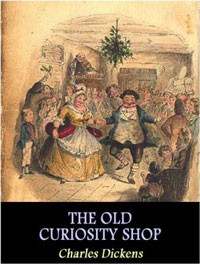 The Cocktail Talks from our old pal Charles Dickens’ classic story The Old Curiosity Shop are shading towards the longish (there’s so much good stuff, I don’t want to cull or cut if I can), and as I don’t want to distract, going to keep this intro short. For more about the book, more wonderful quotes about drinks and drinking shops in the delicious Dickens style, more about how I adore Dickens, and just more more more (which you should always want), don’t miss earlier Cocktail Talks from The Old Curiosity Shop: Part I, Part II (from longer ago), and Part III (from recent ago). And don’t miss the below either (or other Dickens Cocktail Talks), where a little mild porter is consumed, and where a window is opened to holler at a beer-boy – I wish I could do that now!
As a means towards his composure and self-possession, he entered into a more minute examination of the office than he had yet had time to make; looked into the wig-box, the books, and ink-bottle; untied and inspected all the papers; carved a few devices on the table with a sharp blade of Mr. Brass’s penknife; and wrote his name on the inside of the wooden coal-scuttle. Having, as it were, taken formal possession of his clerkship in virtue of these proceedings, he opened the window and leaned negligently out of it until a beer-boy happened to pass, whom he commanded to set down his tray and to serve him with a pint of mild porter, which he drank upon the spot and promptly paid for, with the view of breaking ground for a system of future credit and opening a correspondence tending thereto, without loss of time.
–Charles Dickens, The Old Curiosity Shop
July 21, 2020
Well, this should surprise no-one who knows me in the littlest, but I’ve been re-reading one of Charles Dickens’ legendary books (that category of “legendary” covers all his books, more-or-less), as I do on regular occasions. This time, The Old Curiosity Shop, and as with every time I re-read Dickens, I found more to love that I had forgotten, re-read passages I remembered and loved, and was reminded of the glorious humorousness of Dick Swiveller, the big horror of Quilp and the lesser (though still a horror) horror of Grandfather, the sturdy Kit and his bouncy pony, the mighty small Marchioness, and of course the sweet sad Little Nell – and about a million more! Not to mention the many Cocktail Talk moments, as Dickens (I hope you know this) loved his pubs, tipples, and consumers of beverages cold and hot. Actually, I’ve had two Cocktail Talk posts from The Old Curiosity Shop already, so be sure to read Part I and Part II to start things off with the right flavor (not to mention, though I will, all the other Charles Dickens Cocktail Talks). And then come back, so you can reach this quote about the above-mentioned Dick Swiveller, one of my (many many) Dickens favs, and about “rosy wine” which sounds a bit like Pink Gin in practice!
“’Fred,’ said Mr. Swiveller, ‘remember the once popular melody of Begone dull care; fan the sinking flame of hilarity with the wing of friendship; and pass the rosy wine.’ Mr. Richard Swiveller’s apartments were in the neighbourhood of Drury Lane, and in addition to this convenience of situation had the advantage of being over a tobacconist’s shop, so that he was enabled to procure a refreshing sneeze at any time by merely stepping out upon the staircase, and was saved the trouble and expense of maintaining a snuff-box. It was in these apartments that Mr. Swiveller made use of the expressions above recorded for the consolation and encouragement of his desponding friend; and it may not be uninteresting or improper to remark that even these brief observations partook in a double sense of the figurative and poetical character of Mr. Swiveller’s mind, as the rosy wine was in fact represented by one glass of cold gin-and-water, which was replenished as occasion required from a bottle and jug upon the table, and was passed from one to another, in a scarcity of tumblers which, as Mr. Swiveller’s was a bachelor’s establishment, may be acknowledged without a blush.”
–Charles Dickens, The Old Curiosity Shop
July 14, 2020
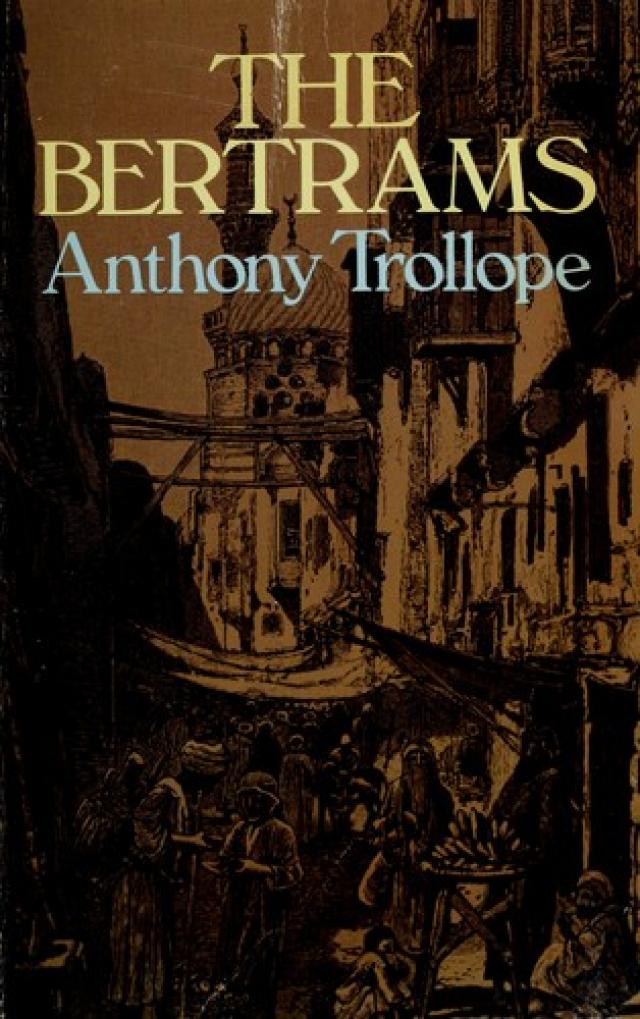
 For our final quote from Trollope’s The Bertrams (which, while not the finest Trollope tale available, is well worth a few days’ or weeks’ read) we have a little pale ale, about which we have a fine bit of wisdom from one of our main characters. I love it! And I am also fond of The Bertrams Part I and The Bertrams Part II Cocktail Talk quotes, so if you haven’t seen them, go back in time (via the helpful links) and catch up, before we bid adieu to our pal Tony Trollope on the ol’ Spiked Punch – at least for now!
“’And at last Mrs. Price got her porter, and Mrs. Cox got her pale ale. ‘I do like pale ale,’ said she; ‘I suppose it’s vulgar, but I can’t help that. What amuses me is, that so many ladies drink it who are quite ashamed to say they like it.’
‘They take it for their health’s sake,’ said Bertram.
‘Oh, yes: of course they do.’”
–Anthony Trollope, The Bertrams
July 7, 2020
Hello you! Did you see or not see The Bertrams Part I Cocktail Talk, in which I called the immortal Anthony Trollope “Tony” and talked about this book we’re quoting from? If you didn’t see that yet, then by all means, go read it now (and you could read all the Anthony Trollope Cocktail Talks, too, if you want). But if you have, and so you really have all the background and build up and such, then why not dive right into the below quote, which focuses on two mad military men, who aren’t really a large part of the overall story (heck, they barely feature at all). But, this quote was my introduction to “tiffin-time,” which is like (or was? Still is? You tell me) an Indian afternoon tea, round 3 p.m., and where it seems they also had beer! I like it. And of course, I’m always happy to see the boozy wine punch Sangaree make an appearance!
“And the brows of Major Biffin and Captain M’Gramm were clouded. They had been filling the plates and glasses of these two ladies all the way from Calcutta; they had walked with them every day on deck, had fetched their chairs, picked up their handkerchiefs, and looked after their bottled beer at tiffin-time with an assiduity which is more than commendable in such warm latitudes. And now to be thrown on one side for two travelling Englishmen, one in a brown coat and the other in a black one for two muffs, who had never drunk Sangaree or sat under a punkah!”
–Anthony Trollope, The Bertrams
June 30, 2020
Well, anyone who is anyone knows that I love myself some Anthony Trollope. More than anyone else is the world? I’m not sure about that, as there are some fanatical Trollope-ites out there, and more power to ‘em. But I do love old Anthony (or, Tony, as I call him when we’re chatting), and have read I think all but two of his books, or three, perhaps, which is in a way a nice feeling, as I have that to look forward to. I also have re-reading (and re-re-reading and onwards in some cases) the books I have, one of which is The Bertrams (pubbed 1859), a tale theoretically of three chaps, but really one (George Bertram) is the spotlight guy most of the time. Is The Bertrams my favorite Trollope, or in the top half? Probably not (just lacks a little of the Trollope balance, parallelisms, and rounded characters, and such, to me). Am I still really glad and re-read it, and do I hope to be around long enough to re-read it again? Damn straight Tony! And does the book have a number of Cocktail Talk worthy moments? Damn straight again! Starting with the below, which is probably one of the few Milk Punch moments in classic literature.
“Having uttered these very lugubrious words, and almost succeeded in throwing a wet blanket over the party, he sat down.
‘Now, you’re not going to do anybody else, are you?’ said Madden.
‘Only Twisleton, and Gerard, and Hopgood,’ answered Bertram; ‘and Fortescue looks as if he expected it. Perhaps, however, he’ll let us off till the day after to-morrow.’
And then, with a round of milk punch, another cigar apiece, and a little more chat, the party broke up.”
–Anthony Trollope, The Bertrams








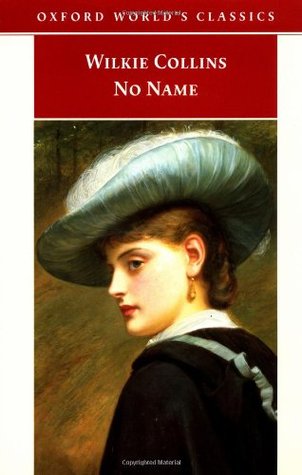 We are back for more Cocktail Talking from 1800s writer Wilkie Collins’ lesser-known gem No Name. If you haven’t read the No Name Part I Cocktail Talk, then I strongly suggest you do, to get a little background on the book, and the author (and if you really want to go into history, of a slightly less recent sort, but far more recent than the author himself, check out another Wilkie via The Yellow Mask and Other Stories Cocktail Talk). Did all that? Fan-Victorian-tastic! In this, our second No Name treat, our heroine Magdalen Vanstone is (in disguise – just letting you know that to be intriguing!) getting a tour of a house from one of its occupants, the charming (and tipsy) old sailor Mazey, who is a well-done memorable character, especially when he’s talking about monks drinking grog!