November 23, 2021
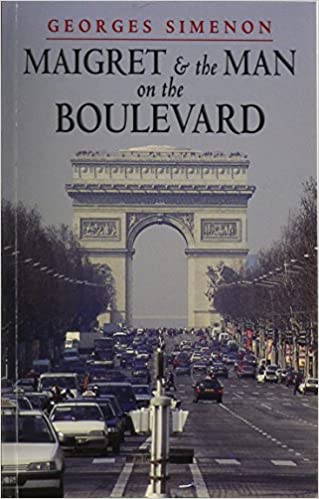
 Another quote from the Chief Inspector Maigret yarn I’ve been most recently reading (as opposed to all of those I’ve read in the past: check out all the Maigret Cocktail Talks to get a view into some of them – at least don’t miss the Maigret and the Man on the Boulevard Part I Cocktail Talk, to learn more about this particular book by George Simenon), one where our main character sits down in a very serious and thinking mood at his favorite of all Parisian spots – or the one he visits the most, which is saying something, though it is right across from his office – and gives the waiter a little of the Maigret-ness so many criminal have to deal with.
“What’s the Veau Marengo like?”
“Excellent, Monsieur Maigret.”
Without realizing it, he was subjecting the waiter to a look that could not have been sterner if he had been a suspect under interrogation.
“Beer, sir?”
“No. A half-bottle of claret.”
He was just being perverse. If the waiter had suggested wine, he would have ordered beer.
–George Simenon, Maigret and the Man on the Boulevard
Tags: beer, Claret, Cocktail Talk, George Simenon, Inspector Maigret, Maigret, Maigret and the Man on the Boulevard, Part II, Veau Marengo
Posted in: beer, Cocktail Talk, Wine
November 16, 2021
I’m back into another George Simenon yarn starring Parisian Inspector Maigret (there have been many Maigret Cocktail Talks you can browse at will), an ideal read for a rainy November day, as during a fair part of Maigret and the Man on the Boulevard Paris is engulfed in heavy rains. And our stolid, stoic, Chief Inspector (to give him his full due) moves along through the wet and dry and cloudy days in his own particular way: slow at times, thoughtful at times, dreamy (can I say that? I did!) at times, but always pushing forward. His case this time involves the murder of a man who had a second-life of sorts, pointed out first by the fact that he was murdered wearing light brown shoes, shoes which his wife swears he didn’t own, and which Maigret calls “goose-dung” shoes, due to the color. That’s amazing! Maigret follows the various threads, spooling them up one-by-one, while stopping for various sips along the way: wine, Calvados, aperitives, more, maybe even more than usual (one of the many reasons I love Maigret so much is his love of bars, bistros, brasseries, and other eating-and-watering holes. Even when they are around-the-corner, as in the below).
“Where to now chief?”
It was just eleven o’clock.
“Stop at the first bistro you come to.”
“There’s one next door to the shop.”
Somehow, he felt shy of going in there, under Leone’s watchful eye.
“We’ll find one round the corner.”
He wanted to ring Monsieur Kaplan, and to consult the street guide, to find Monsieur Saimbron’s exact address on the Quai de la Megisserie.
While he was there, having started the day with a Calvados, he thought he might as well have another, and drank it standing at the bar counter.
–George Simenon, Maigret and the Man on the Boulevard
November 9, 2021
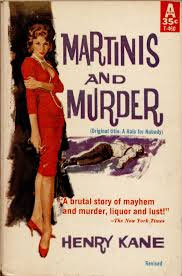 Well, what I can I say about the Henry Kane hard-boiled pocket-sized slurper Martinis and Murder which hasn’t been said in the Martinis and Murder Cocktail Talks Part I, Part II, Part III, and Part IV? Well, nothing really (and, really, the cover says it all!), so let’s just get to the below quote – you can catch up on the rest by reviewing the past posts while you sip something nice and potent.
We danced all through it, comfortably and close. We drank brandy from big Napoleon glasses. The music got hot. The place filled up, got warm and noisy.
“Peter,” she said, inhaling smoke through a long holder with a finger loop, “I’m beginning not to like it here. Can’t we go somewhere else where it is quieter?”
“Do you like Sibelius?”
“I adore Sibelius.”
“I have Sibelius in quantities on wax discs and I have a lovely fireplace and I have oil paintings that cost me much, and I have a book of pornographic studies dating back to the fifteenth century. No etchings. But I have Pernod.”
“Sibelius and Pernod. You are a wicked man”
–Henry Kane, Martinis and Murder
November 2, 2021
 Way back now, oh, 6 years ago (wowza, times flies) or thereabouts I first read the Henry Kane pulper Martinis and Murder, starring detective, drinker, dancer (well, probably), romancer (certainly), and puncher Peter Chambers. And had a number of Cocktail Talks from it (check out Martinis and Murder Part I, Part II, and Part III to get caught up a bit). But recently I was hankering for some pocket-sized pulp reading, as I often am, and was pulled in by its catchy title and even-more-catchy cover, so re-read it. And, you know what? I found even more Cocktail Talk worthy quotes. The book is spilling boozy goodness (around some murdering and mystery-ing and hard-boiled action and smooching and such). Heck, in six years from now, I’ll probably read it again, and find even more potable quotables. But for today, let’s go with the below.
I came back and I asked, “How about some of the finest Sidecars ever concocted?”
“If you let me watch.”
“Why not?”
She trailed behind me. I turned and pushed her against the wall of the kitchen and kissed her hard.
“That for inspiration? she gasped.
“That’s for nothing,” I said.
I went to work with lemons and Cointreau and Cognac.
We brought the mixer into the living room, and in no time at all, fleece gathered.
–Henry Kane, Martinis and Murder
October 26, 2021
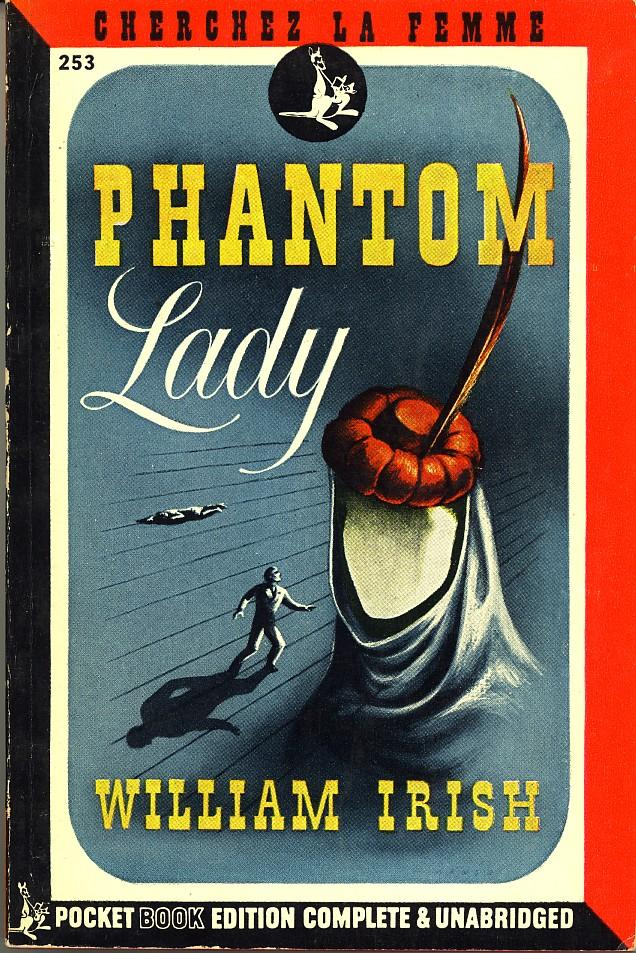
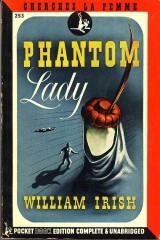 I went down a large Cornell Woolrich hole at one point in my life, and in some ways never came out (perhaps I’m not in as deep as I once was, which isn’t to say my liking of books by said author is less, but maybe to say I’ve read such a fair amount of those available that there aren’t that many more readily available) – heck, check out the past Cornell Woolrich Cocktail Talks for evidence. There are a fair few of them! You’ll get lots of background on this, the noir-y-est (in many ways – I mean, no mystery writer uses the word “black” in more titles for a start, but also he’s such a master of psychological dark moods and mental, as well as action-driven, thrillers that seem going down a dark path) of the pulp writers, perhaps. He also wrote under a couple pseudonyms, the best-known being William Irish, under-which name he became famous enough that I have a copy of The Best of William Irish which I was recently re-reading. Featuring two full-length reads and a handful of stories, the book’s highlight may well be “Rear Window” (from which the legendary movie was made, which you should re-watch right now), which, funny enough, I think was pub’d under Cornell’s own name originally (and originally called “It Had to be Murder”). But if you have a story which a famous movie is based on, you work it in. The whole collection starts with perhaps the most famous William Irish-monikered tale (though that could be debated), the novel Phantom Lady, which I am also lucky enough to have as a standalone book, and which was also made into a movie in 1944, a movie I haven’t seen, but would love to! The book’s chapters all countdown to an execution (28 Days Before the Execution, etc.), which gives an insight into the plot: a man is accused – falsely, we know – of the murder of his wife, with only one possible way to convince the police he’s innocent, finding of a missing woman who can place him at a bar at a particular time. It’s a good read and then some, keeping you moving and twisting around this way and that way, with a few more murders and lots of surprises. Having a bar with a key role doesn’t hurt, either, and neither does the mention of Jack Rose cocktails, among others, in the below Cocktail Talk quote.
He said, “I had a Scotch and water. I always have that, never anything else. Give me just a minute now, to see if I can get hers. It was all the way down near the bottom –“
The barman came back with a large tin box.
Henderson said, rubbing his forehead, “There was a cherry left in the bottom of the glass and – “
“That could be any one of six drinks. I’ll get it for you. Was the bottom stemmed or flat? And what color was the dregs? If it was a Manhattan the glass was stemmed and dregs, brown.”
Henderson said, “It was a stem-glass, she was fiddling with it. But the dregs weren’t brown, now, they were pink, like.”
“Jack Rose,” said the barman briskly. “I can get it for you easy, now.”
–Cornell Woolrich (writing as William Irish), Phantom Lady
Tags: apple brandy, applejack, Bars, Cocktail Talk, Cornell Woolrich, grenadine, Jack Rose, lemon, Manhattan, Phantom Lady, Scotch, Scotch and water, sweet vermouth, Whiskey, William Irish
Posted in: Bars, Brandy, Cocktail Talk, Manhattan, Scotch, vermouth, Whiskey
October 19, 2021
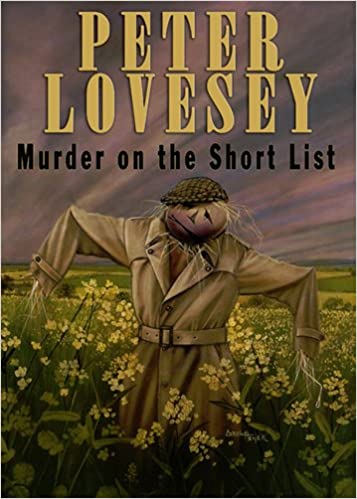
 It’s a smidgen odd that I haven’t had more Peter Lovesey Cocktail Talks here on the ol’ Spiked Punch, just as I read and re-read his books (especially his Peter Diamond mysteries) as much as nearly any written words. Though, on the flip side, he doesn’t dwell in the bars and boozes as much as some, so maybe not so strange? Anyway, before I ramble so far we end up lost in the English countryside, today we are having a Lovesey Cocktail Talk, with a quote from the story “Bullets,” which I recently re-read when I was re-reading his killer (hahaha) collection, Murder on the Short List, a collection full of mysteries and mysterious deaths, some featuring a couple of his classic characters and some not. While I may shade my favoritism towards the longer works, many like his stories best, and he is a master – all of which is to say, pick this book up if you see it. This particular short story starts with an inspector getting ready to talk to the relatives of man found dead in his study, supposedly (!) by suicide.
They were sitting at the kitchen table in 7, Albert Street, their small suburban house in Teddington. They had a bottle of brandy between them.
The inspector accepted a drink and knocked it back in one swig. When talking to the recently bereaved he needed all the lubrication he could get.
–Peter Lovesey, “Bullets”
October 12, 2021
 I wasn’t sure we’d have two An Old Man’s Love Cocktail Talks, as it’s a quicker read (especially in comparison with many Trollope gems). However, here we are! I had to feature the quote in Part I (read it, to find out why, and to find out more about the book, the last full novel written by the English great, and for even more, check out all the Trollope Cocktail Talks), and then when mulling things over, didn’t want to miss the below, either. In it, we learn our lead character has had drinking whiskey as a doctor’s recommendation – something that doesn’t happen enough today!
He had, indeed, felt but little his want of success in regard to money, but he had encountered failure in one or two other matters which had touched him nearly. In some things his life had been successful; but these were matters in which the world does not write down a man’s good luck as being generally conducive to his happiness. He had never had a headache, rarely a cold, and not a touch of the gout. One little finger had become crooked, and he was recommended to drink whisky, which he did willingly,—because it was cheap. He was now fifty, and as fit, bodily and mentally, for hard work as ever he had been.
–Anthony Trollope, An Old Man’s Love
October 5, 2021
 First published in 1884, An Old Man’s Love was the last novel completed by the Spiked Punch’s pal Anthony Trollope, published after his death (there’s one more unfinished novel, too – oh, and check out all the Trollope Cocktail Talks to learn more, in an overall way, while having oodles of reading fun), and also one of the few novels by him that I’d yet to read, until recently! It’s a short novel, and almost could have slipped into novella size, though I’d hate to miss all but a few of his last words. I wouldn’t put it into the super-awesome tier of Trollope, as it’s fairly one-path’d as opposed to his thicker, more layered pieces. But it’s a good study of just what the title would have you believe: an older gentleman falls for his younger ward and nearly marries her – but then a past love of her’s shows up, and stuff ensues, as you’d expect. There are a few other pertinent characters, including the old man’s (Mr. Whittlestaff, that is), housekeeper, with whom he has some funny exchanges, and her drunken reprobate of an estranged husband. The latter is featured in the below quote, which itself also features one of my favorite phrases, “drunk as a lord.” This phrase usage is really why the below makes it to Cocktail Talk status. Drunk as a lord! I’ve been there, my friends.
On the next morning, when John Gordon reached the corner of the road at which stood Croker’s Hall, he met, outside on the roadway, close to the house, a most disreputable old man with a wooden leg and a red nose. This was Mr. Baggett, or Sergeant Baggett as he was generally called, and was now known about all Alresford to be the husband of Mr. Whittlestaff’s housekeeper. For news had got abroad, and tidings were told that Mr. Baggett was about to arrive in the neighbourhood to claim his wife. Everybody knew it before the inhabitants of Croker’s Hall. And now, since yesterday afternoon, all Croker’s Hall knew it, as well as the rest of the world. He was standing there close to the house, which stood a little back from the road, between nine and ten in the morning, as drunk as a lord. But I think his manner of drunkenness was perhaps in some respects different from that customary with lords. Though he had only one leg of the flesh, and one of wood, he did not tumble down, though he brandished in the air the stick with which he was accustomed to disport himself. A lord would, I think, have got himself taken to bed. But the Sergeant did not appear to have any such intention.
— Anthony Trollope, An Old Man’s Love








 Another quote from the Chief Inspector Maigret yarn I’ve been most recently reading (as opposed to all of those I’ve read in the past: check out all the Maigret Cocktail Talks to get a view into some of them – at least don’t miss the Maigret and the Man on the Boulevard Part I Cocktail Talk, to learn more about this particular book by George Simenon), one where our main character sits down in a very serious and thinking mood at his favorite of all Parisian spots – or the one he visits the most, which is saying something, though it is right across from his office – and gives the waiter a little of the Maigret-ness so many criminal have to deal with.